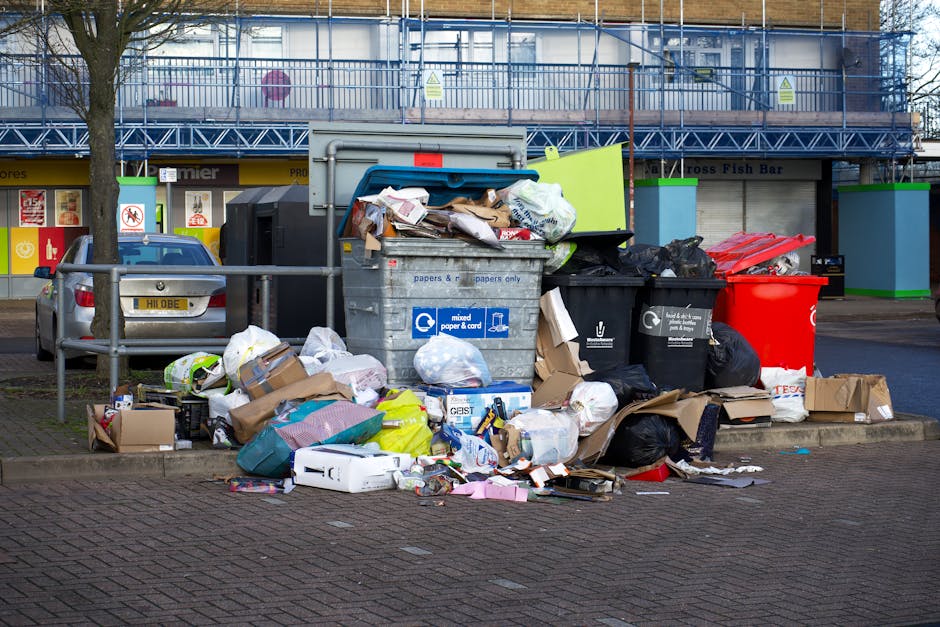
Compare Highbury Rubbish Prices: Van vs Skip Costs
If you are trying to clear rubbish in Highbury, the choice between a rubbish van and a skip can change the price, the hassle, and even how quickly the job gets done. Compare Highbury Rubbish Prices: Van vs Skip Costs is really about more than headline numbers. It is about access, volume, labour, timing, and what you actually want the service to do for you. A lot of people only notice the price tag. Then the lorry turns up, the skip permit becomes an issue, or the extra labour starts adding up. Bit annoying, really.
This guide breaks the decision down in plain English. You will see how van collections and skip hire usually differ, where each option works best, what affects the final cost, and how to avoid paying more than you need to. It also covers practical examples from the kind of homes, flats, offices, gardens, and renovation jobs people deal with around Highbury every day.
Table of Contents
- Why comparing van and skip prices matters
- How van collections and skip hire work
- Key benefits and practical advantages
- Who this is for and when it makes sense
- Step-by-step guidance
- Expert tips for better results
- Common mistakes to avoid
- Tools, resources and recommendations
- Law, compliance, standards, or best practice
- Options, methods, or comparison table
- Case study or real-world example
- Practical checklist
- Conclusion
- Frequently asked questions
Why Compare Highbury Rubbish Prices: Van vs Skip Costs Matters
At first glance, a skip can look like the straightforward option. You pay for the container, fill it over a set period, and job done. But in real life, rubbish rarely behaves that neatly. Maybe the waste is spread across a top-floor flat, maybe the street outside is tight, or maybe you need the pile gone today rather than "sometime next week". That is where a van collection often starts making more sense.
Highbury has a mix of flats, period terraces, busy roads, and limited driveway space. That local layout matters more than people expect. A skip might work brilliantly for a garden renovation with driveway access, while a rubbish van may be better for a flat clearance or a quick office tidy where the team can carry items down stairs and load them on the spot. Comparing prices properly helps you match the service to the actual job instead of forcing the job to fit the service.
The other reason this comparison matters is cost creep. A skip hire quote can look low until you factor in permit needs, the size you guessed wrong, or extra days. A van collection can seem more expensive upfront, yet include loading, lifting, labour, and disposal in one cleaner price. So the cheapest option on paper is not always the cheapest in the end. Funny how that happens.
For many customers, the real question is not "Which is cheaper?" It is "Which gives me the best value for this particular load?" That is a better question, and a far more useful one.
How Compare Highbury Rubbish Prices: Van vs Skip Costs Works
The easiest way to compare the two is to think about what you are paying for.
Skip hire is mainly a container rental. The skip is dropped off, left for an agreed period, and later collected. You load it yourself. The price usually reflects the skip size, hire duration, and sometimes permit requirements if the skip must sit on a public road. If you overfill it, add prohibited waste, or keep it longer, the price can rise.
Van rubbish collection is usually a labour-inclusive service. The team arrives with a vehicle, loads your items, removes them, and handles disposal. That means you are paying not just for transport, but also for the hands-on work. This can be a big advantage if the rubbish is heavy, awkward, upstairs, or mixed with bulky items.
The key difference is simple:
- A skip asks you to do the loading.
- A van service does the lifting and loading for you.
- A skip suits ongoing or self-managed clearances.
- A van suits faster, hands-off, or access-challenging jobs.
When comparing prices, try to compare the whole job, not just the container or the vehicle. Ask yourself how much time you will spend shifting waste, whether you have enough space, and whether you need help carrying it from inside the property. Those are real costs, even if they do not show up on the first quote.
For example, a busy household doing a clear-out may be better served by a home clearance service if the waste includes mixed household items and furniture. Likewise, if the job is mostly furniture, the practical route may be to combine collection with furniture disposal rather than trying to solve everything with a skip. Different jobs, different economics.
Key Benefits and Practical Advantages
When you compare van and skip costs properly, the benefit is not just saving money. It is making a better decision under pressure. And let's face it, rubbish clearances are often decided in the middle of a move, a renovation, a bereavement, or a deadline. Nobody wants another thing to think about.
Why a van collection can be cost-effective
- No loading effort for you: ideal if waste is heavy, bulky, or upstairs.
- Better for tight access: handy in streets where a skip would be awkward or impossible.
- Often faster: one visit can solve the whole problem.
- Less risk of permit hassle: especially when the vehicle can be parked briefly for loading.
- Useful for mixed items: household waste, furniture, and small renovation debris can often be handled in one go.
Why a skip can still be the better value
- Good for long jobs: renovations and ongoing projects often suit a skip well.
- You can load gradually: helpful if waste is being created over days.
- Clear separation: useful when you want a single dedicated container on site.
- Works well with driveway access: especially if space is not an issue.
A useful rule of thumb is this: if the rubbish is already outside, dry, and easy to load over several days, a skip may compete well on cost. If the rubbish is inside the property, mixed, heavy, or urgent, a van collection often delivers better value even if the invoice looks a bit higher at first glance.
There is also a human benefit that gets overlooked. A tidy site, a clear hallway, or an emptied office feels better straight away. You can hear the difference, almost. Less clatter, fewer boxes, less visual mess. Small thing, big relief.
Who This Is For and When It Makes Sense
This comparison matters to a surprisingly wide group of people in Highbury and nearby North London. If you are not sure which side you fall on, you probably fit one of these scenarios.
- Homeowners clearing clutter: lofts, spare rooms, cupboards, and old furniture.
- Flat owners or tenants: where access is tight and stairs make loading tricky.
- Landlords: after a tenancy change, especially where items have been left behind.
- Businesses: offices, studios, retail spaces, and stockrooms that need a fast reset.
- Builders and renovators: for mixed rubble, packaging, timber, or renovation waste.
- Gardeners and DIYers: when the waste is awkward, muddy, or heavier than expected.
If you are dealing with a larger domestic clearance, it may be worth looking at house clearance or flat clearance rather than treating the job like a standard rubbish drop-off. Those services tend to suit real-life clear-outs better, especially when items need to be removed from inside the property.
It also makes sense for anyone comparing labour versus self-loading. If your back is already complaining at the thought of moving a sofa down the stairs, that is your answer right there. To be fair, your back is usually right.
Step-by-Step Guidance
If you want a fair comparison, do not start with the cheapest headline number. Start with the waste itself.
- List everything that needs removing. Include bulky items, loose rubbish, bags, and anything awkward like broken furniture or old shelving.
- Estimate volume honestly. People often undercount. A few bags, a table, and some boxes can fill a lot more space than expected.
- Check access. Can a vehicle park close enough? Are there stairs, narrow hallways, shared entrances, or permit restrictions?
- Think about labour. If you must carry everything yourself, a skip may not save time or energy.
- Compare total costs, not just starting prices. Add permit risks, hire duration, extra days, and the value of your own time.
- Match the service to the job type. Mixed household waste, furniture, and office items may be better suited to van collection.
- Ask what is included. Disposal, loading, waiting time, and congestion-related issues should all be clear before you book.
A practical way to think about it: if the waste will take you several hours to load into a skip, and most of that time is spent carrying items through the property, the van quote may look a lot more sensible. The quote is only the beginning; the real cost is the whole experience.
Expert Tips for Better Results
Here are the kinds of small decisions that often separate a smooth clearance from a mildly frustrating one.
1. Group waste by type before you compare
Separate what is bulky, what is loose, and what is potentially reusable. A cleaner picture helps you estimate more accurately. It also stops you from paying for extra space you do not need.
2. Measure access, not just volume
Highbury properties can be deceptive. A job that looks tiny from the pavement can involve three flights of stairs and a narrow landing. If loading is difficult, labour becomes part of the real price.
3. Be careful with overfilling assumptions
People sometimes think they can just "squeeze a bit more in" to save money. That can backfire. Whether you are using a skip or a van, capacity has a limit. Physics is rude like that.
4. Choose flexibility when your waste is still evolving
If more rubbish is likely to appear over the next few days, a skip may suit a staged clear-out. If everything is already ready to go, a van can usually finish the job in one visit.
5. Ask about sorting and recycling
Some services are better suited to separating materials sensibly. If sustainability matters to you, this is worth asking about. It is not just about "gone"; it is about where it goes next. You can read more on the company's recycling and sustainability approach.
6. Do not ignore hidden disruption
A skip on a narrow street can create practical headaches. A van collection can avoid those, especially in busier parts of the area. In our experience, the least stressful option is often the one that disturbs the neighbours the least.
Common Mistakes to Avoid
A lot of price comparisons go wrong for very ordinary reasons. Nothing dramatic. Just small oversights that snowball into unnecessary cost.
- Comparing only the upfront number. You need the whole job price, not a teaser rate.
- Forgetting permit costs. Skips on public roads can involve extra admin and extra money.
- Underestimating access problems. A difficult driveway, staircase, or road can change the economics fast.
- Assuming all waste is the same. Mixed waste, furniture, builders' debris, and garden waste often behave differently in pricing terms.
- Leaving the decision too late. Urgency can narrow your choices and push up costs.
- Not checking what loading labour is included. This is a big one. The "cheap" option may only be cheap because it leaves all the lifting to you.
Another classic mistake is booking the wrong service for the wrong environment. For example, a builders waste clearance is usually a better fit for renovation debris than a general skip if the waste has to be removed quickly from inside or around the property. Likewise, a cluttered garage may be better served by garage clearance when the contents include old tools, boxes, and mixed odds and ends that are awkward to sort on your own.
Tools, Resources and Recommendations
You do not need specialist software to make a sensible choice, but a few simple tools help a lot.
- A tape measure: useful for bulky items, access points, and tight spaces.
- Phone photos: excellent for getting accurate quotes without guesswork.
- A room-by-room list: helps you avoid missing items in lofts, sheds, or cupboards.
- A rough loading plan: useful if you are thinking about using a skip.
- Paper and pen, old-school style: honestly, it still works.
If you are handling a specialist clear-out, it can also help to compare the relevant service pages rather than trying to force everything through a general waste category. For example, a stockroom or workspace may be better aligned with business waste removal or office clearance, while a garden project may lean toward garden clearance if branches, soil bags, and outdoor clutter are involved.
For furniture-heavy jobs, two pages are especially relevant: furniture clearance for mixed bulky removals, and furniture disposal when the job is mostly about responsibly removing unwanted pieces. These can be more suitable than hiring a skip if the items are large, awkward, and sitting inside the property.
Law, Compliance, Standards, or Best Practice
Any rubbish removal choice should be made with basic compliance and safety in mind. That does not mean turning a household clear-out into a legal seminar. It just means being sensible.
In the UK, waste should be handled responsibly, and it is wise to use a service that can dispose of rubbish properly and separate recyclable material where possible. If you are hiring a skip, check the placement rules carefully, especially if it will sit on a public road. If you are using a van collection, make sure the operator is clear about loading, transport, and disposal practices.
For businesses, there is an added layer of responsibility. Office, retail, and commercial waste should be managed in a way that avoids fly-tipping risk, protects staff safety, and reduces disruption. That is one reason some companies prefer a dedicated business waste removal solution rather than a one-off container hire. It can be cleaner operationally, especially when timing matters.
Health and safety is worth a quick mention too. Heavy lifting, sharp edges, broken glass, and cramped stairwells are not glamorous, but they are part of the job. A properly run service should take those risks seriously. You can also review the company's health and safety policy and insurance and safety information if you want extra reassurance before booking.
Payment clarity matters as well. No one likes surprise extras after the work is done. A trustworthy quote should make it clear what is included, what could change the price, and how payment is handled. That is just good practice. The kind that saves arguments later.
Options, Methods, or Comparison Table
Here is a straightforward comparison to help you decide.
| Factor | Van Collection | Skip Hire |
|---|---|---|
| Loading effort | Done for you | You load it yourself |
| Best for | Urgent, bulky, mixed, or hard-to-access waste | Longer projects and gradual loading |
| Access needs | Usually more flexible | Requires enough space for drop-off |
| Permit risk | Usually lower if parking is straightforward | Can be relevant if placed on a road |
| Speed | Often same-day or fast turnaround | Slower, depending on hire and collection timing |
| Best value when | Labour and convenience matter most | Waste is easy to load and generated over time |
| Typical pain point | May cost more if the load is tiny | Can become inconvenient if access is poor |
If you want the short version: van collections usually win on convenience, access, and labour savings. Skips often win when you have space, time, and a steady flow of waste. Neither is universally cheaper. The cheaper option is the one that matches the job cleanly.
Expert summary: For Highbury properties with stairs, narrow streets, or mixed bulky waste, van-based rubbish removal often gives better overall value. For slower, self-loaded projects with good access, a skip can still be the simpler financial choice.
Case Study or Real-World Example
Imagine a three-bed flat in Highbury with an old sofa, two wardrobes, several black bags, a dismantled desk, and a few broken kitchen chairs. The stairwell is narrow, the parking is limited, and the residents want everything gone before a move at the weekend.
A skip could be used, but it would probably need careful placement and still require the household to carry everything down to the vehicle or container. That means time, lifting, and likely a few awkward shuffles around the hall at 8:00 in the evening. Not ideal.
Now imagine the same job as a van collection. The team arrives, carries the bulky items down, loads the bags, and clears the lot in one visit. The quote may be higher than the base cost of a small skip, but once you factor in labour, time, and the awkward access, the van route may be the better-value solution.
By contrast, picture a small garden refresh with hedge cuttings, old timber, and a pile of soil sacks building up over a weekend. The area has decent driveway space, and the waste is being generated over two or three days. In that case, a skip may be a sensible fit because the loading is gradual and the access is easy. Different job, different answer.
That is the heart of the comparison: not which option sounds better in theory, but which one fits the real shape of the mess in front of you. And yes, rubbish always seems bigger once you start sorting it.
Practical Checklist
Use this before you request a quote or book a collection.
- Have I listed every item that needs removing?
- Do I know roughly how much space the waste will take?
- Is the waste inside, outside, or spread across both?
- Will the job involve stairs, narrow access, or parking limits?
- Do I need help with lifting and loading?
- Is the waste likely to grow over the next few days?
- Would a skip or a van create less disruption at the property?
- Have I checked whether a permit might be needed for a skip?
- Do I understand what is included in the quote?
- Would a more tailored service be better, such as loft clearance for upstairs storage or house clearance for a whole-property job?
If you can answer those questions clearly, the price comparison becomes much easier. If not, take another five minutes and walk through the property once more. That little pause often saves a lot of money.
Conclusion
Comparing Highbury rubbish prices between van collections and skip costs is really about understanding value, not just price. A skip can be economical for easy, self-loaded, longer-term jobs with good access. A van collection can be the better option when the waste is bulky, urgent, awkward, or spread through a property and you want it handled without the heavy lifting.
The best decision usually comes from a simple, honest look at the job itself: where the waste is, how much of it there is, how quickly it needs to go, and how difficult it will be to move. Once you think in those terms, the answer tends to become clearer. Less guesswork, fewer surprises.
If you want a straightforward next step, compare the full job, not just the headline rate. That is where the real savings are found, and that is where many people in Highbury save themselves a bit of stress too.
Get a free quote today and see how much you can save.
Frequently Asked Questions
Is a rubbish van usually cheaper than a skip in Highbury?
Not always. A van can be better value when you need labour, fast removal, or difficult-access clearance. A skip can be cheaper for easy self-loading jobs. The right answer depends on the waste, the access, and how long the job will take.
When does skip hire make more sense than a van collection?
Skip hire often makes sense if you are clearing waste gradually over several days, have good access for drop-off, and do not mind loading everything yourself. It can be a practical fit for DIY work, garden projects, or slow renovation jobs.
What affects rubbish removal prices the most?
Volume, type of waste, access, labour, and urgency all affect price. Location matters too, especially in tighter streets or flats where loading can take more time. If a job is awkward to reach, the cost usually reflects that.
Do I need a permit for a skip in Highbury?
If the skip is placed on public land or a road, a permit may be needed. If it sits entirely on private land, such as a driveway, it may not. The exact requirement depends on placement, so it is worth checking before booking.
Is a van better for flats and apartments?
Often yes. Flats and apartments frequently involve stairs, shared entrances, or restricted parking. A van collection can be more convenient because the team can load items directly from inside the property without you having to do the lifting.
Can I mix furniture and general rubbish in one collection?
Usually, yes, as long as the service accepts the mix and you are clear about what is included. Mixed waste is common in household clearances, and a combined collection can be simpler than arranging separate removals.
What if I only have a small amount of waste?
If the load is small, a skip may be excessive. A smaller van-based collection or a tailored service may be more cost-effective. It is worth asking for a quote based on the actual amount rather than assuming you need the biggest solution.
Are van collections faster than skip hire?
Usually yes. A van collection can often be completed in one visit, sometimes on the same day. A skip depends on drop-off, loading time, and later collection, so it is generally slower overall.
How do I know if my waste is suitable for a skip?
If the waste is dry, loadable, and can be added gradually, a skip may suit it well. If the waste is inside the property, heavy, or awkward to move, a van collection is often easier. Mixed bulky items are especially worth comparing carefully.
What should I ask before accepting a quote?
Ask what is included, whether labour is part of the price, how access affects the cost, whether there are extra charges for delayed loading or special waste, and whether recycling is handled responsibly. Clear answers now are better than awkward surprises later.
Is this comparison useful for businesses too?
Yes. Offices, shops, studios, and small commercial spaces often need a service that is quick, discreet, and flexible. In those cases, a van-based option or a dedicated office clearance can be more practical than hiring a skip.
Can I save money by doing part of the work myself?
Sometimes, yes. If you can safely gather items into one area before the team arrives, that may help. But if you are risking injury, making several trips, or delaying the job, the savings can disappear fast. The best approach is the one that is safe and realistic.
Where can I find more information about the company and policies?
You can review the company's about us page, pricing and quotes, payment and security, and terms and conditions if you want a clearer picture before booking. It is a sensible thing to do, honestly.